
GRANDE STONEWARE presents THE TOP – 12MM & GRANDE – 6MM
This exclusive porcelain slab collection is an industry leading surface covering. Made with the use of technological tile advancements, THE TOP -12MM& GRANDE 6MM delivers unrivalled beauty and product innovation. The cutting-edge manufacturing process and material reliability are paired with style, aesthetics and a genuine passion for ceramics. Ultimately, when design ends emotion always begins.
Please read below for a basic overview and further details regarding PORCELAIN panels.
Origins and Composition
Porcelain originates from a long history of ceramic development that began in ancient China, while their modern industrial “slab” form is largely a recent innovation led by Italian and European manufacturers. European “hard paste” porcelain was first successfully reproduced in 1708 by Ehrenfried Walther von Tschirnhaus and Johann Friedrich Böttger in Saxony, Germany.
History: Porcelain originated in ancient China. Modern “slab” technology was pioneered by Italian manufacturers, with Germany, Spain, India and Turkey also being major producers.
Natural Composition: Porcelain slabs are “man-made” from a blend of naturally occurring raw materials.
Materials: A blend of natural minerals: Kaolin (strength), Feldspar (density), and Silica/Quartz (hardness).
Key Characteristics
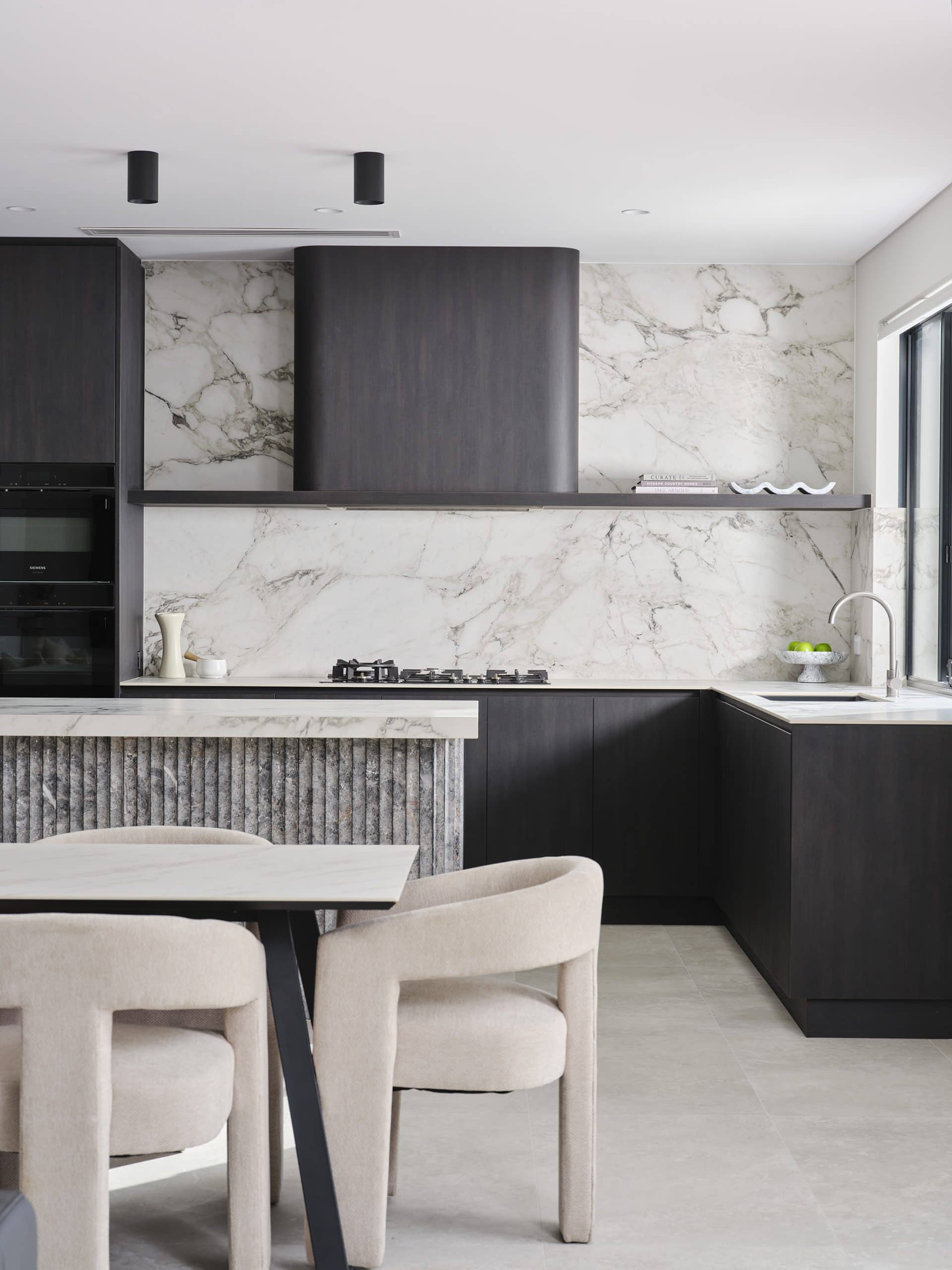
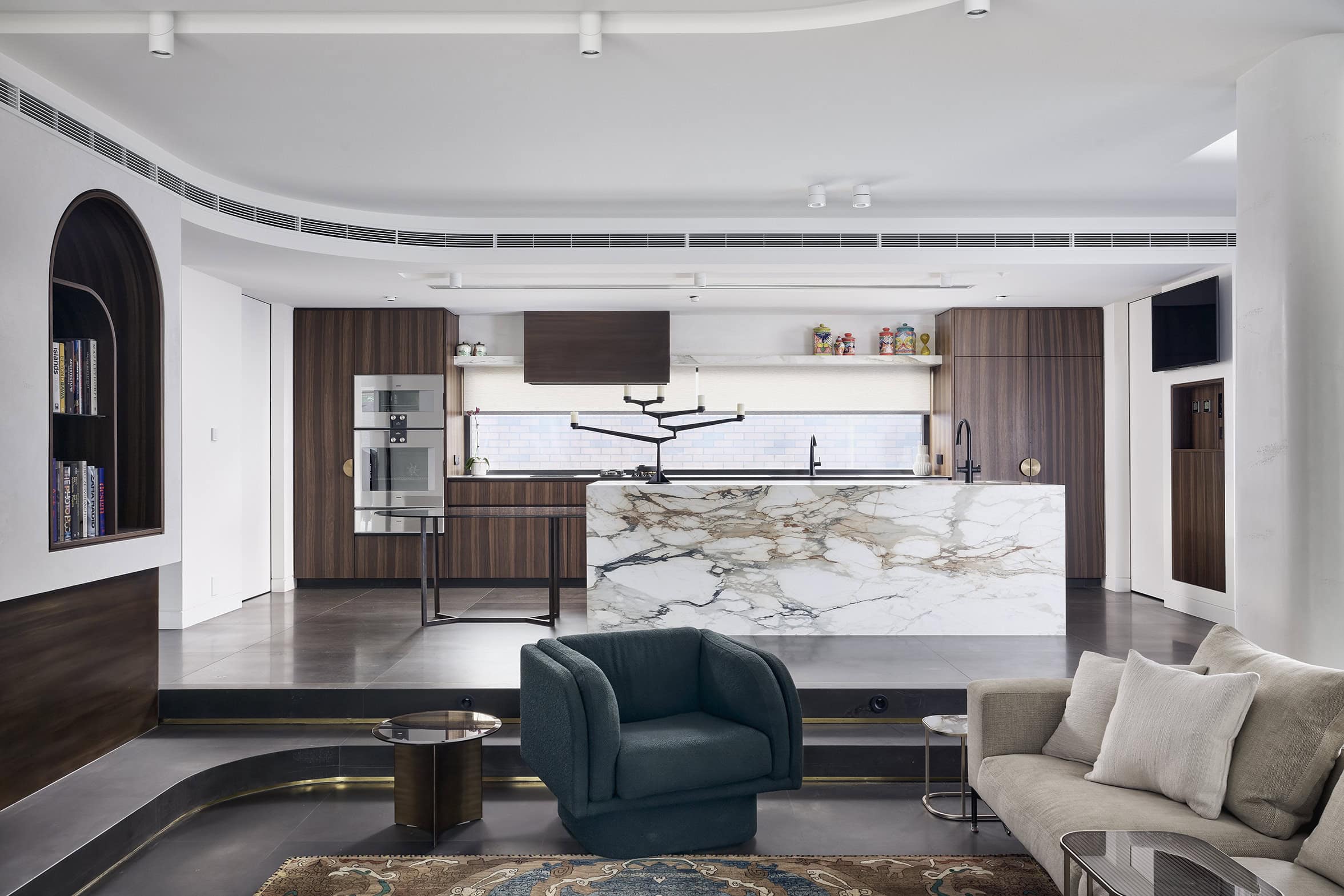
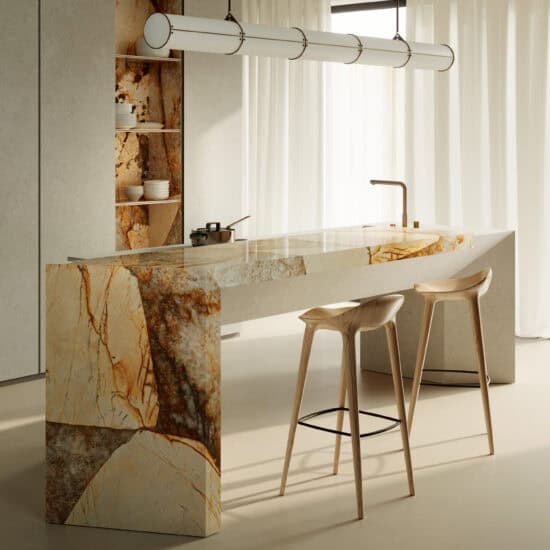
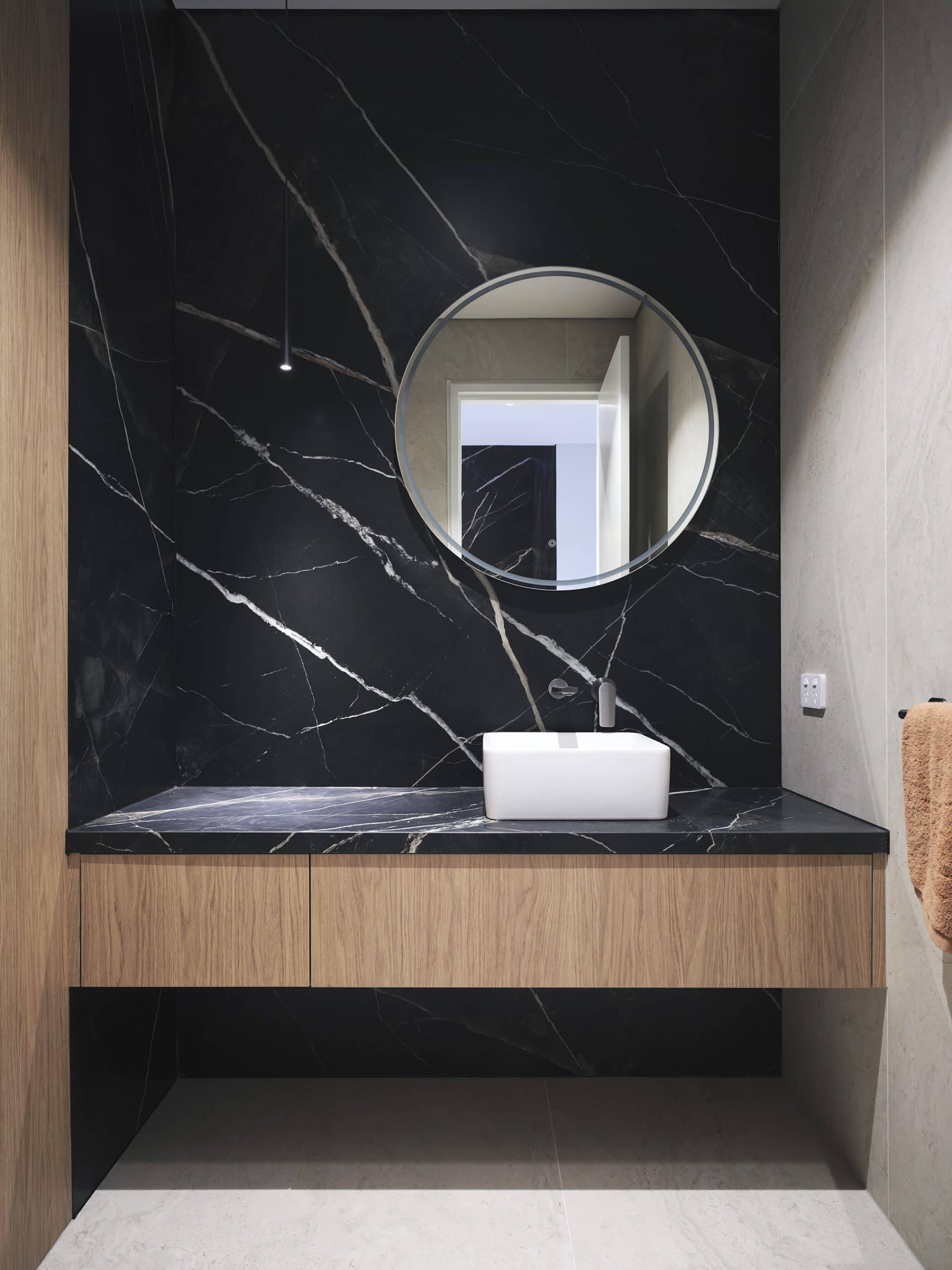
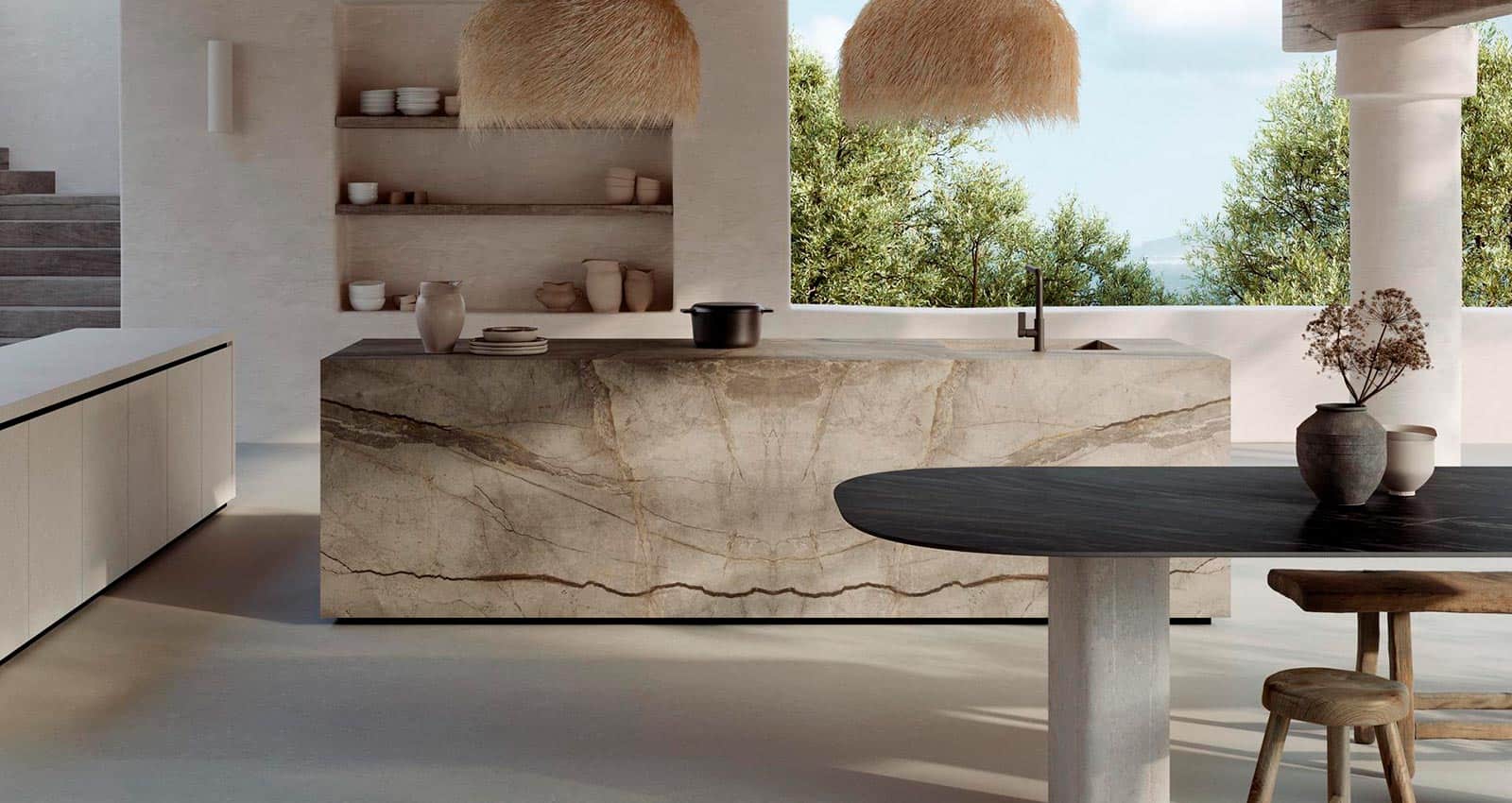
Versatile Design: Large formats (up to 1620 x 3240 mm) with digital printing that mimics natural stone, wood, concrete and metal.
Weatherproof: UV stable and frost resistant, suitable for both indoor and outdoor use.
Extreme Durability: Porcelain ranks high on the Mohs hardness scale (typically 7–8), making it harder and more scratch-resistant than most natural stones like granite or marble.
Low Porosity: With a water absorption rate of less than 0.5%, these slabs are virtually impervious to moisture, preventing stains, mould and bacterial growth.
Thermal and UV Resistance: They can withstand extreme heat (from hot pots or pans) and direct UV exposure without scorching, fading, or discolouring, making them ideal for outdoor kitchens.
Thickness Variations: Common thicknesses range from 6mm (for wall cladding, splashbacks and general flooring) to 12mm (for heavy-duty countertops).
Low Maintenance: Unlike natural stone, porcelain slabs are non-porous and do not require periodic sealing. They are easily cleaned with basic soap and water.
Aesthetic Versatility: Advanced digital printing allows manufacturers to realistically mimic natural materials such as marble, wood, concrete and metal.
Frost Resistance: Their density prevents water from entering the material, making them resistant to cracking in freeze-thaw cycles for outdoor use.
Sustainability: Slabs are made from natural minerals like kaolin, feldspar, and silica and are fully recyclable at the end of their lifespan.
Manufacturing Process
Preparation: Minerals are ground into a fine powder and dried into granules.
Compaction: High-pressure pressing (up to 38,000 tons) removes air to create a dense body.
Printing: High-definition inkjet printers apply the aesthetic pattern.
Firing: Slabs are fired at 1200°C–1400°C, fusing minerals into a non-porous mass (vitrification).
Batching: Precise amounts of natural minerals—typically kaolin clay, feldspar, quartz, and silica—are mixed.
Milling: These materials are ground into an ultra-fine powder using ball mills with water to create a liquid “slurry”.
Spray Drying: The slurry is sprayed into a dryer where hot air evaporates the water, leaving behind small, uniform granules with a specific moisture content (approx. 5–7%).
High-Pressure Pressing: Unlike standard tiles, modern slabs often use mould less or belt-based presses (like the Continua+ or Lamgea systems).
Immense Force: Slabs are compressed under forces reaching 15,000 to 38,000 tons, effectively removing air pockets and creating a dense “green” body.
Drying: These unfired slabs pass through long chambers to reduce residual moisture to below 1%, preventing cracks during firing.
Digital Inkjet Printing: High-definition printers apply photorealistic patterns (mimicking marble, wood, or concrete) directly onto the surface.
Glazing: A protective glaze may be applied to enhance durability and provide specific finishes like matte, glossy, or textured.
Kiln Process: The slabs travel through roller kilns that can be over 100 meters long.
Extreme Temperatures: They are fired at temperatures between 1200°C and 1400°C.
Vitrification: Under this intense heat, the minerals fuse into a single, non-porous mass. This process, called vitrification, gives the slab its glass-like density and extreme hardness.
Rectification: Once cooled, slabs are precision-ground to ensure perfectly straight edges and exact dimensions.
Polishing: Diamond grinding wheels are used if a high-gloss finish is required.
Quality Inspection: Automated scanners and AI systems check for flatness, colour consistency, and structural integrity before packaging.
Maintenance
Sweep or Vacuum: Use a soft-bristled broom or a vacuum with a hard-floor setting to remove grit and debris. Regular removal of these particles prevents them from acting like sandpaper and dulling the surface over time.
Damp Mopping: For most indoor surfaces, mopping with warm water and a clean microfiber cloth or mop is sufficient.
pH-Neutral Cleaners: When a deeper daily clean is needed, use a pH-neutral detergent (like mild dish soap). Avoid oil-based or wax-based cleaners, as they can leave a film that attracts dirt and causes streaks.
Blot, Don’t Rub: Blot liquid spills immediately with an absorbent cloth to keep them from spreading.
Organic Stains (Coffee, Wine, Food): Use a paste like Jiff or Gumption. Apply it to the stain, let it sit for 10–15 minutes, then scrub gently with a soft brush before rinsing.
Oil and Grease: Use a degreasing agent specifically designed for porcelain. For heavy BBQ grease on outdoor slabs, alkaline cleaners are recommended.
Hard Water & Limescale: Use specialized cream cleansers or a diluted solution of white vinegar (50/50 with water) for stubborn mineral deposits, but test in an inconspicuous area first as acid can damage some grout.
Protect Surfaces: Use felt pads under furniture legs and mats at entryways to minimize scratches from tracked-in dirt.
Avoid Impact: Porcelain can chip under heavy impact; avoid dropping heavy objects, particularly near the edges of the slab.
Thermal Protection: While highly heat-resistant, use trivets or hot pads for cookware straight from the oven to prevent localized thermal stress.
Common Panel Applications
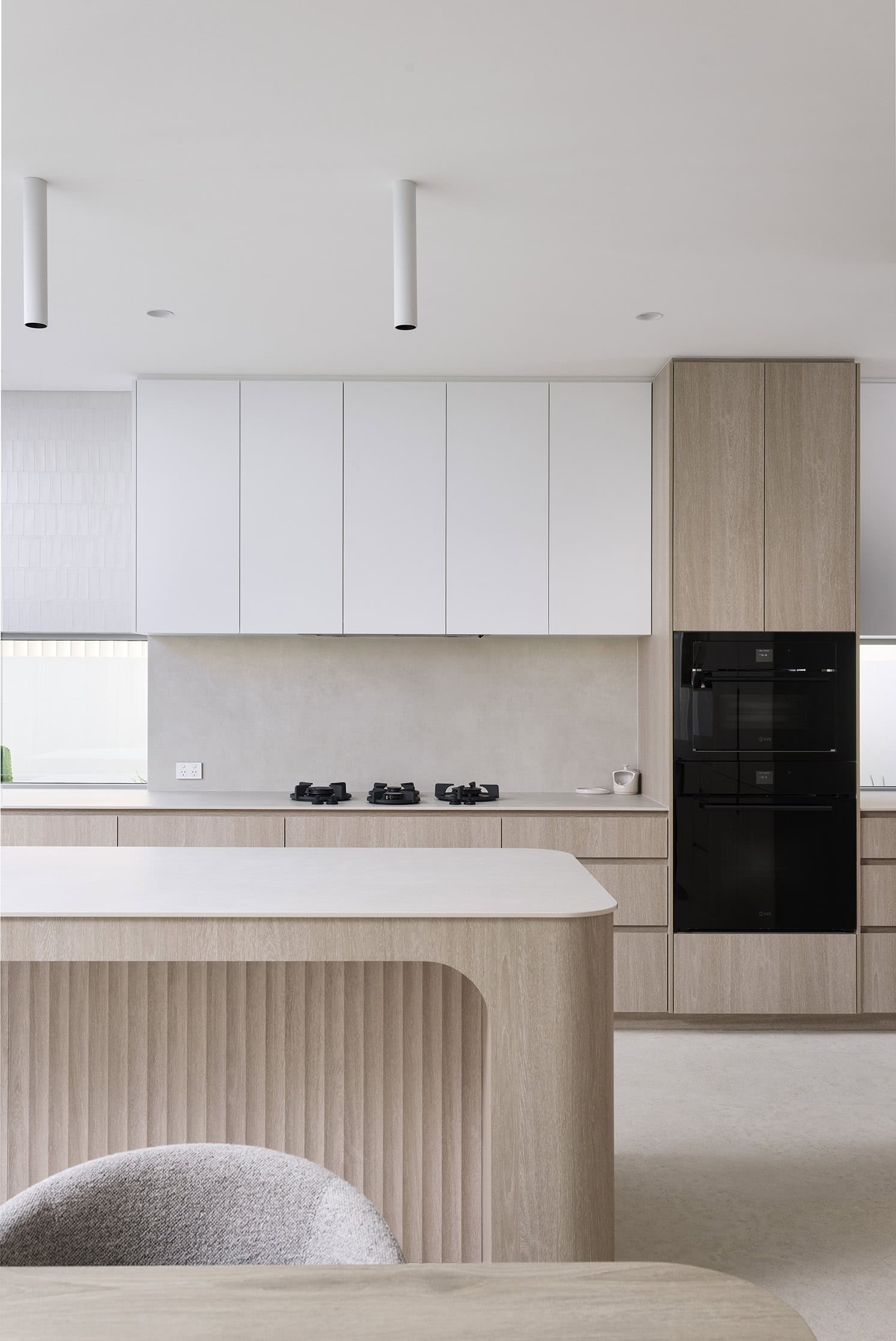
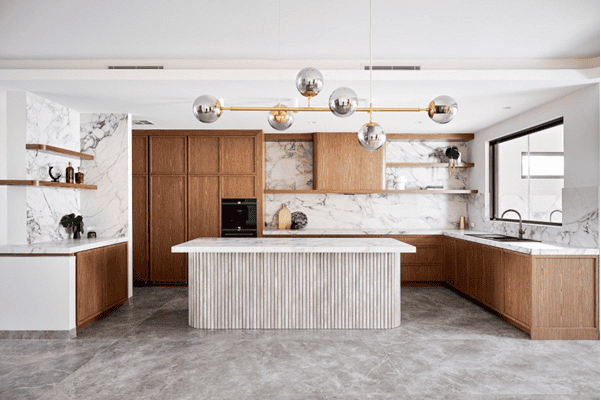
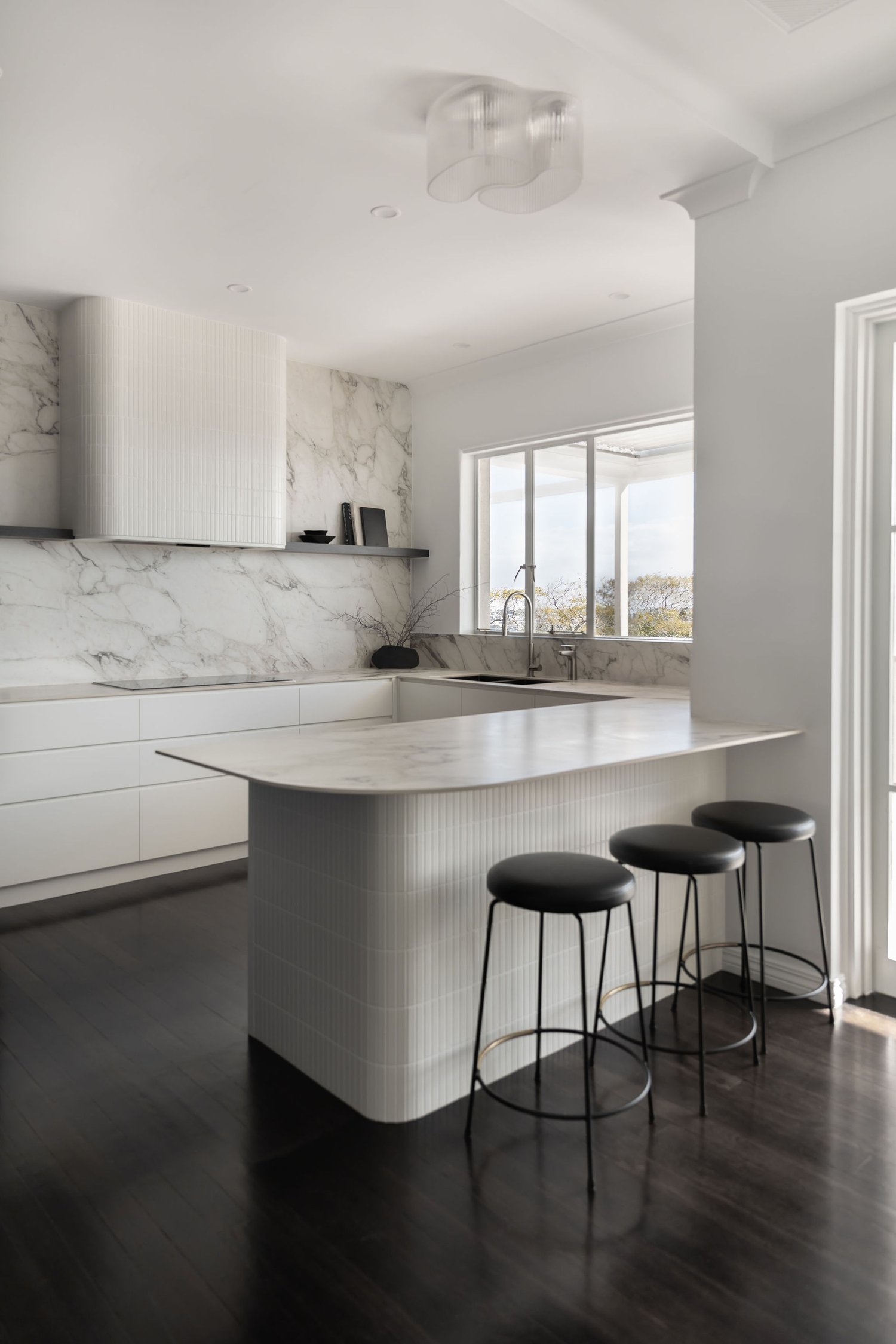
Interior: Kitchen benchtops and splashbacks, laundry/scullery benchtops and splashbacks, bathroom benchtops, bathroom walls and floors, general flooring areas, staircases, fireplace and TV surrounds, dining tables and bespoke furniture.
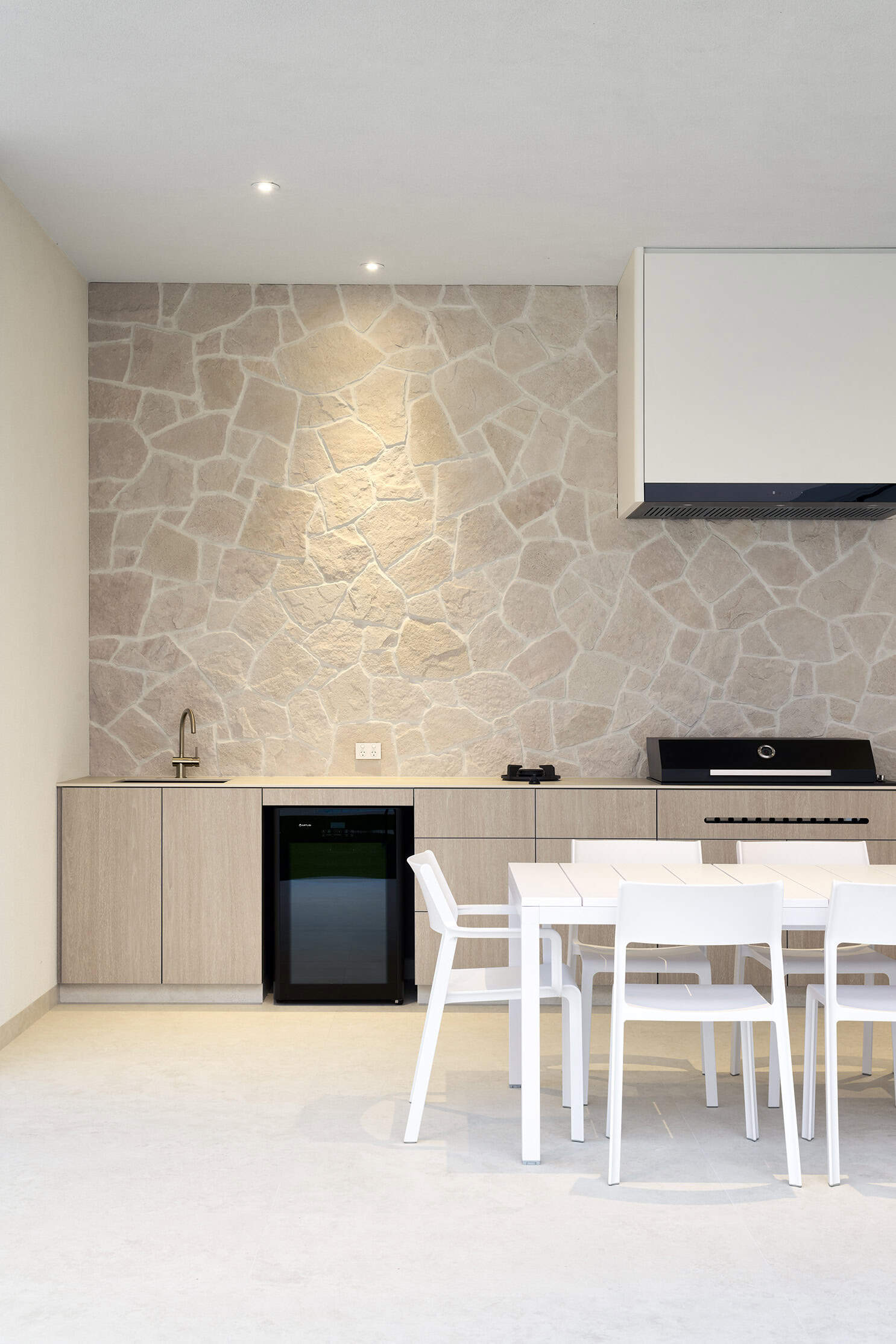
Exterior: Outdoor kitchens, outdoor showers, general flooring areas, building facades, dining tables and bespoke furniture.
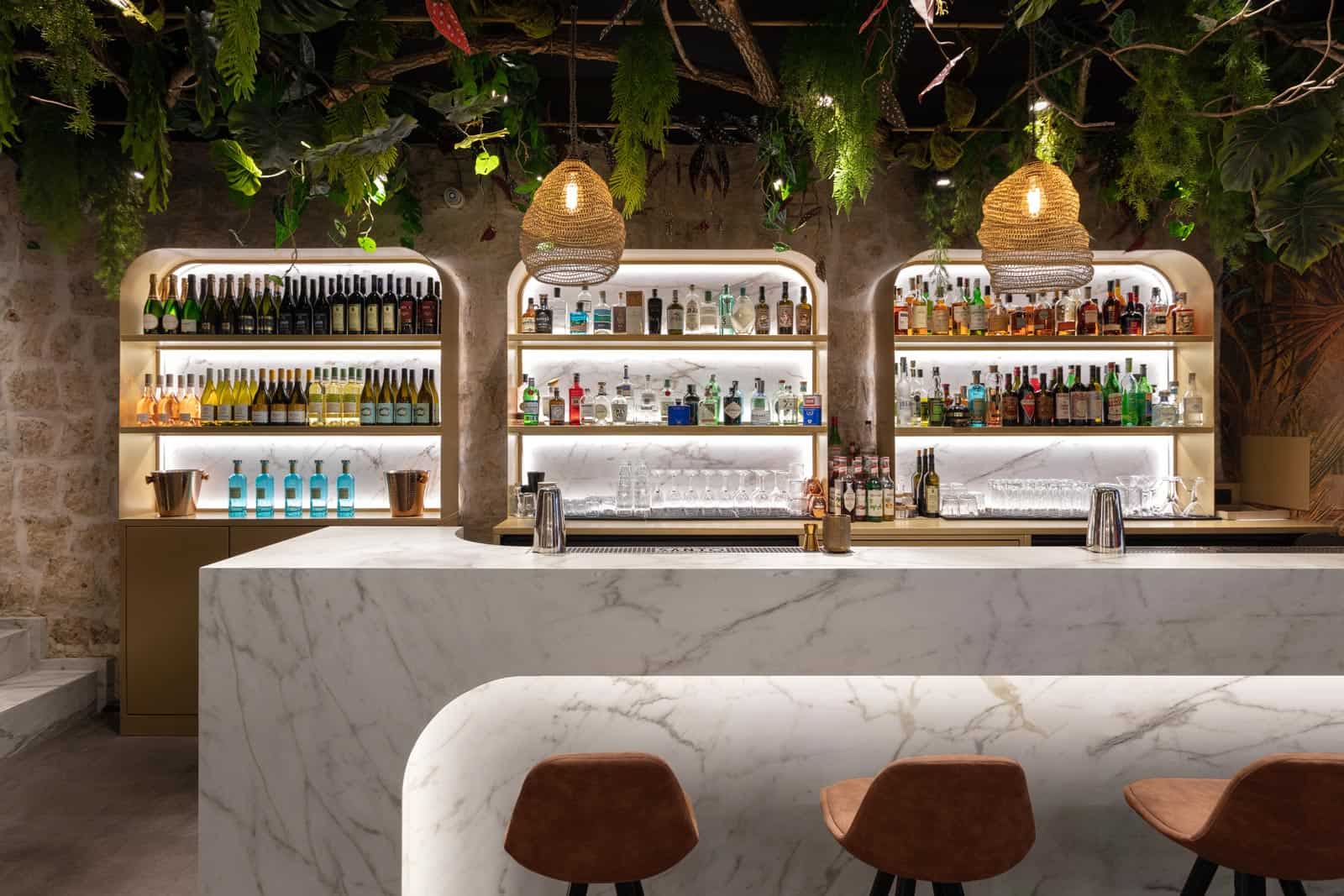
Commercial: Multi residential kitchen and bathrooms benchtops, hygienic benchtops for hospitals and schools, healthcare and medical facilities, retail and hospitality spaces, food preparation areas, dining tables and bespoke furniture, High-traffic floor areas like airports and shopping centres, lobbies and common area flooring.
Please feel free to contact our team for further information.
Contact Details:
Email: info@grandestoneware.com
Phone: 08 9377 3385